
The wines of Chateau Musar offer unique expressions from a country with an ancient wine‑making culture. For more than 6,000 years, people have cultivated vines in Lebanon’s high‑altitude Bekaa Valley. From around 4,500 BC, the sea‑faring Phoenicians — ancestors of modern Lebanese people — distributed their wines and vines throughout the Mediterranean. They travelled as far as Cadiz, and possibly beyond, in their robust cedar boats.
Their resilience in the face of repeated invasion inspired the legend of “The Phoenix”. They also invented the alphabet to keep records of their transactions. The ancient city of Baalbek, in the northern Bekaa Valley, takes its name from the Phoenician fertility god Baal. Later, people worshipped the Roman god Bacchus here, and the temples honouring him remain among the most perfectly preserved in the world.
The region’s wines appear many times in the Bible. The first recorded evidence of wine transactions comes from Byblos — “book” in Greek — an historic fishing port north of Beirut. French in origin, the Hochar family arrived in Lebanon in the 12th century as “Preux Chevaliers” and has remained there ever since.
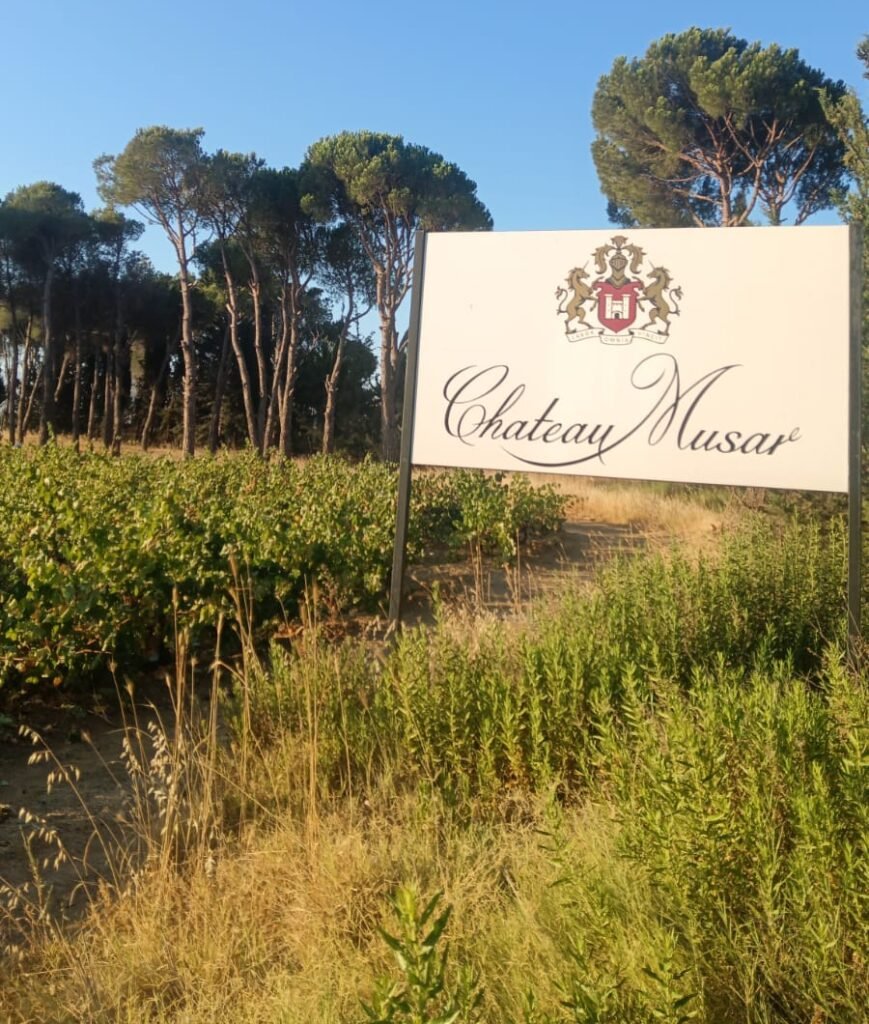
Lebanon lies at the eastern end of the Mediterranean, bordered by Syria to the north and east and Israel to the south. Similar in size to Wales, the country features the Lebanon and Anti‑Lebanon mountain ranges running in parallel, with the Bekaa Valley between them. Because of its favourable geographical and climatic conditions, Lebanon has always offered abundant promise.
Forming part of the Fertile Crescent — where agriculture originated around 10,000 years ago — this area became one of the first to cultivate grapes formally. At 34°N, the centre of the Bekaa Valley sits further south than any part of Spain or Italy and therefore receives generous sunshine during summer.
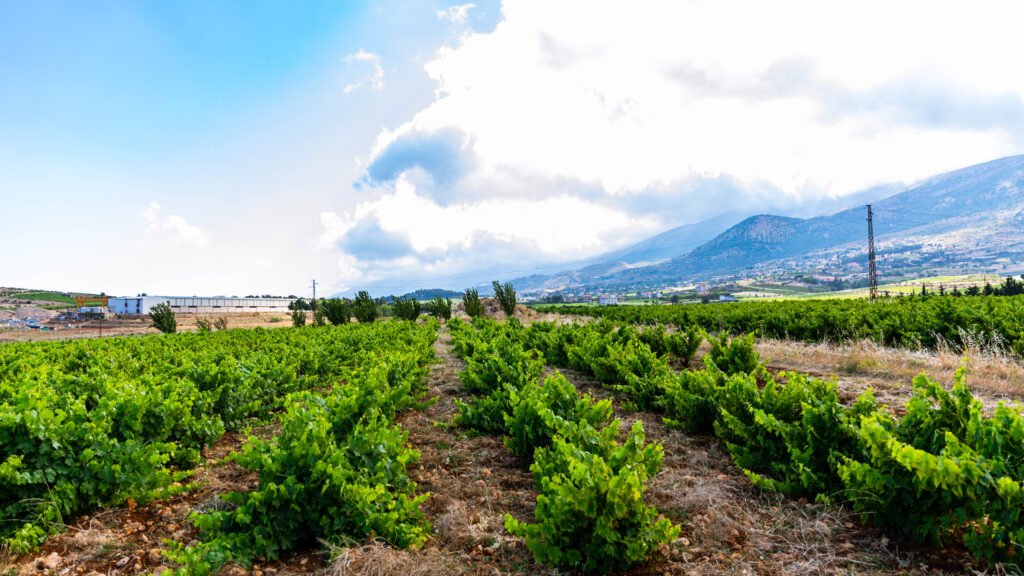
The Musar vineyards benefit from two major advantages: high altitude (around 1,000 metres above sea level) and calcareous, gravel‑and‑stone soils that encourage the production of high‑quality grapes. Vineyards at this altitude enjoy cool nights and seasonal temperature shifts. Winter often brings snow, while summer can be intensely hot. As a result, vines ripen slowly and thrive in this pure “alpine” environment, needing little intervention to remain healthy.
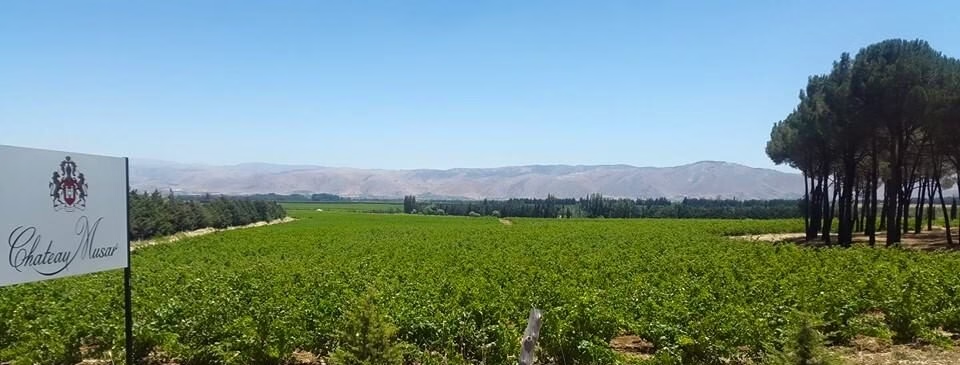
Chateau Musar’s red vineyards lie toward the southern end of the Bekaa Valley, north of Lake Qaroun and about 30 km south‑east of Beirut. They sit near the villages of Aana and Kefraya on gravelly soils over limestone — conditions ideally suited to viticulture. Because of the wide range of soil types and aspects, the resulting wines show distinctive character and appealing complexity.
The grapes used to make Chateau Musar Red include Cabernet Sauvignon and Southern Rhône varieties such as Cinsault and Carignan. These come from long‑established, mature vines that yield a maximum of 30–35 hectolitres per hectare.
The ancient indigenous white grapes Obaideh and Merwah prefer cooler conditions. They grow in vineyards at even higher altitudes, around 1,500 metres above sea level on the mountain slopes.
Every wine at Musar follows a natural, non‑interventionist philosophy. In 2006, the winery became the first in Lebanon to adopt organically certified viticulture for its red and white grapes.
“When you are a winemaker you have the luck to work with something that is alive, and you should never kill it.” — Serge Hochar
Many people ask why Chateau Musar’s winery is an hour’s drive from the Bekaa Valley vineyards. When Gaston Hochar began making wine in 1930, Lebanon’s boundaries had not yet been set. He wanted to ensure his premises would remain inside the newly demarcated country. For this reason, he chose the family’s 18th‑century castle overlooking the Mediterranean at Ghazir, a Maronite Christian enclave about 20 km north of Beirut.
Its name in Arabic is “M’zar”, meaning “place of extraordinary beauty” or “shrine to be visited”. Gaston adapted this name for his new enterprise. As the company expanded, new cellars were built into the mountainside nearby, providing perfect conditions for long‑term wine storage. These cellars proved so secure that villagers used them as air‑raid shelters during Lebanon’s Civil War (1975–1990).
During harvest, Bedouins hand‑pick the grapes in the cool morning hours to preserve freshness. They then drive the grapes in sizeable trucks over the mountains to the winery at Ghazir.
Grapes destined for Chateau Musar Red ferment in separate cement vats. After about six months, the wines are racked and then age for around 12 months in French Nevers oak barriques, only a small percentage of which are new each year.
The resulting wines — Cabernet Sauvignon, Cinsault and Carignan — are blended to reflect the strengths and characteristics of the year. The team bottles them without filtration at the end of the third year following the harvest.
Blending forms an intrinsic part of the winemaking art at Chateau Musar. The team constantly tastes component wines from different vineyards to understand their personality — winemaking by instinct.
The final blend ages for a further three to four years in bottle before release in its seventh year.
Chateau Musar White also ferments in Nevers oak barrels for 6–9 months. The team bottles and blends it after its first year, then stores it in the Musar cellars for six more years before release. This wine, often likened to mature white Graves, can cellar for many years.
“If you give my wines more time, they will give you more joy.” — Serge Hochar
